Clinical judgment
Thinking about AI from medical practice, not from technological fashion.
About me
I write from real clinical practice, healthcare management, and the human interface between medicine and artificial intelligence.
Author
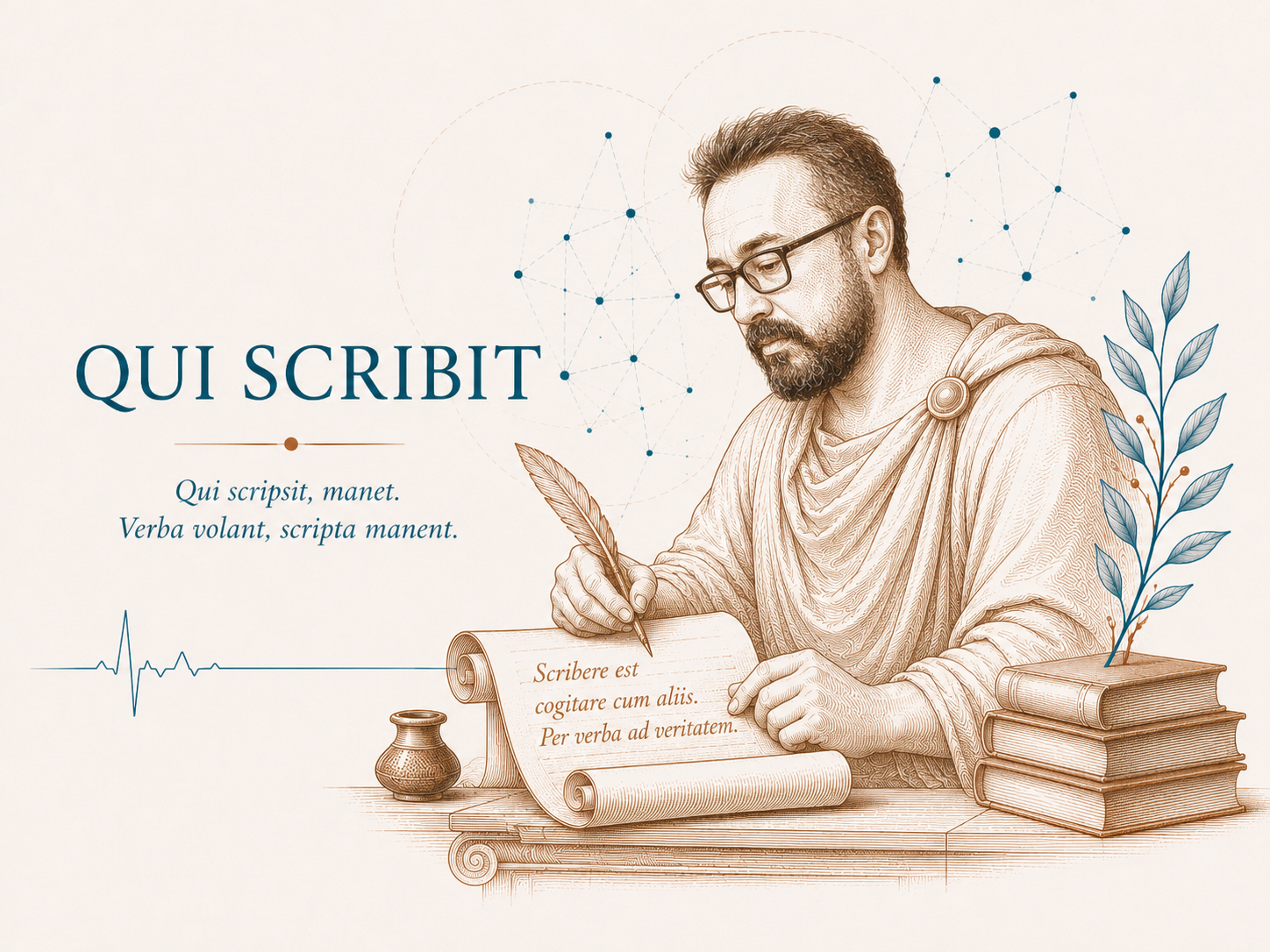
I am Esteban García, Doctor of Medicine, general physician, Coordinator of the Medical Service at Unit 21 in Artigas, and author of Nexus Humanum. I have training in healthcare management and am currently pursuing a master's degree in artificial intelligence applied to health, a path that allowed me to connect concrete clinical practice with digital tools that can improve real processes.
Alongside my medical work, I come from editorial design, web design, and programming. That combination deeply shapes how I look at digital health. Technology interests me when it helps organize information, improve decisions, reduce administrative burden, protect data, strengthen clinical records, and make healthcare teams' work more reasonable.
I did not arrive at artificial intelligence through empty technological fascination, but through a concrete need: understanding how digital tools can help us work better in real health systems, with limited resources, fragmented records, overloaded care, and decisions often made with incomplete information.
Territory
I write from real medicine, not from an idealized setting where every system talks to every other system, data is complete, and technology arrives without friction. I write from contexts where electronic records, paper, spreadsheets, incomplete documentation, scarce time, and the constant need to solve problems still coexist.
In that territory, artificial intelligence must prove concrete usefulness: organize information, reduce administrative load, improve clinical documentation, support decisions, detect risks, and help teams without replacing their judgment.
Nexus Humanum begins from that conviction: between the algorithm and the patient there must always be a responsible human interface.
Interface
My role sits at a crossroads. I do not look at AI only as a physician, a manager, or a technology user. I look from the intersection of clinical practice, healthcare management, electronic health records, data security, medical documentation, interface design, programming, and decision-making.
As a physician, I care that technology does not erase clinical judgment or the human relationship with the patient. As a healthcare manager, I care that tools can be implemented in real workflows without increasing the team's burden. As a programmer and designer, I care that solutions are understandable, usable, sober, and sustainable.
Contribution
Thinking about AI from medical practice, not from technological fashion.
Analyzing technology inside concrete institutions, with real timelines, limitations, rules, and work cultures.
Recognizing fragmented data, professional overload, imperfect records, and the gap between promise and application.